Targeting Longevity 2026 – Conclusion, Awards and Perspective
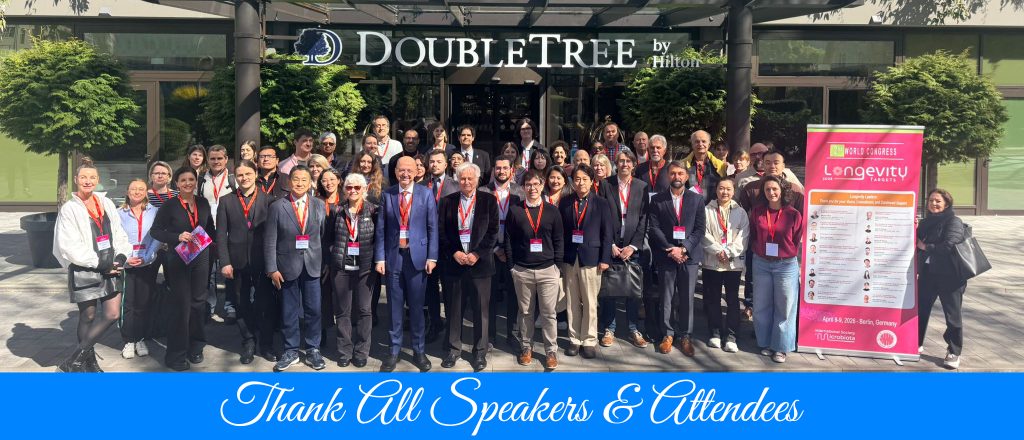
The 2nd World Congress on Targeting Longevity concluded in Berlin with a strong scientific message: longevity research is transitioning from single-target approaches toward systems-level strategies focused on resilience, communication, and prevention.
Several Themes Shaped the Discussions:
- Aging as loss of biological coordination
- Mitochondria, microbiota, and immunity as interconnected regulators
- Senescence as both repair mechanism and aging driver
- Regeneration and stem cell metabolism as determinants of resilience
- Functional biomarkers to monitor biological aging
- Comparative genomics guiding realistic longevity strategies
One important highlight was the discussion on immune based longevity strategies, including the concept that aging-related senescence might be controlled through vaccination approaches, opening new perspectives linking immunology, prevention, and long-term resilience.
Awards Presented
- The Targeting Longevity Visionary Award 2026 was presented to Volkmar Weissig for his pioneering contributions to mitochondrial science and his leadership in shaping systems-based longevity research. His work has helped position mitochondria as central regulators of biological communication, resilience, and aging, a conceptual framework echoed throughout the meeting. Read more about this award
- The Innovation Award 2026 was awarded to Soheil Saeedi for a microbiome-based platform aimed at preventing vascular aging. Read more about this award
- The Best Poster Award 2026 was presented to Ashley Davis from Newcastle University for work linking early aging hallmarks to neurodegenerative vulnerability. Read more about this award
Credibility and Scientific Direction
The meeting reinforced the importance of grounding longevity strategies in mechanistic biology, cross-species evidence, quantitative biomarkers, translational feasibility, and systems biology frameworks.
Rather than speculative interventions, the discussions emphasized biologically plausible and measurable approaches to extending healthspan.
Perspective
Targeting Longevity 2026 highlighted a clear direction. Longevity will not emerge from a single molecule but from coordinated interventions restoring communication across biological systems.
Future priorities include immune-based strategies such as senescence-targeting vaccines, measurement of adaptive resilience, integration of mitochondria–microbiota–metabolism networks, preventive and early-life interventions, and translational systems biology.
Extending healthy lifespan will depend on credible, mechanistically grounded, and systems-driven longevity strategies.
Finally, we thank all speakers, chairs, poster presenters, partners, and attendees for their contribution to this meeting.
Hope we meet you next year.
Marvin Edeas
President