The oral microbiome as an inflammaging amplifier
Longevity is often viewed through a single factor, one pathway, one marker, or one intervention. However, aging-related disease burden increasingly appears to be a systems problem: chronic inflammation arising from interacting networks involving immunity, metabolism, and redox stress.
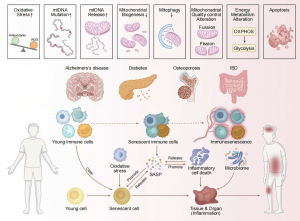
A new review introduces a unifying framework called the “oral microbiome–SASP–aging axis.” In this model, age-related oral microbiome dysbiosis contributes to systemic chronic conditions through microbial metabolic activities, virulence factor release, and immune activation, while SASP is positioned as the key molecular mediator linking dysbiosis to chronic inflammation.
The review describes the oral microbiome as the second largest microbial community in the human body and a “second gut” microbial reservoir for human aging. It also highlights pathways through which oral microbes can influence distant tissues, including translocation to the GI tract via saliva and food, and entry into the bloodstream through wounds, contributing to systemic inflammation.
Mechanistically, the paper emphasizes a reciprocal loop rather than a linear chain. It notes that oxidative stress can lead to mitochondrial dysfunction and metabolic reprogramming, which promote DNA damage and drive cells toward senescence, followed by SASP secretion that disrupts tissue and organ homeostasis. Meanwhile, oral dysbiosis can intensify oxidative stress and SASP secretion through inflammatory signaling pathways, creating a feedback cycle.
The clinical implications discussed are diverse and tissue-specific, linking this axis to inflammatory cascades in conditions such as IBD, Alzheimer’s disease, type 2 diabetes, and osteoporosis, among other age-related diseases.
Healthy aging is tightly linked to limiting chronic, SASP-driven inflammation. Clarifying how oral microbiome dysbiosis reinforces SASP (and how targeted interventions can modulate this cascade) could open new avenues for the prevention and treatment of age-related diseases.
Click here for the full review publication- https://www.tandfonline.com/doi/epdf/10.1080/20002297.2026.2616138?needAccess=true
Share this with your circle