Why Do Some People Live Past 110? Insights from Brazilian Supercentenarians
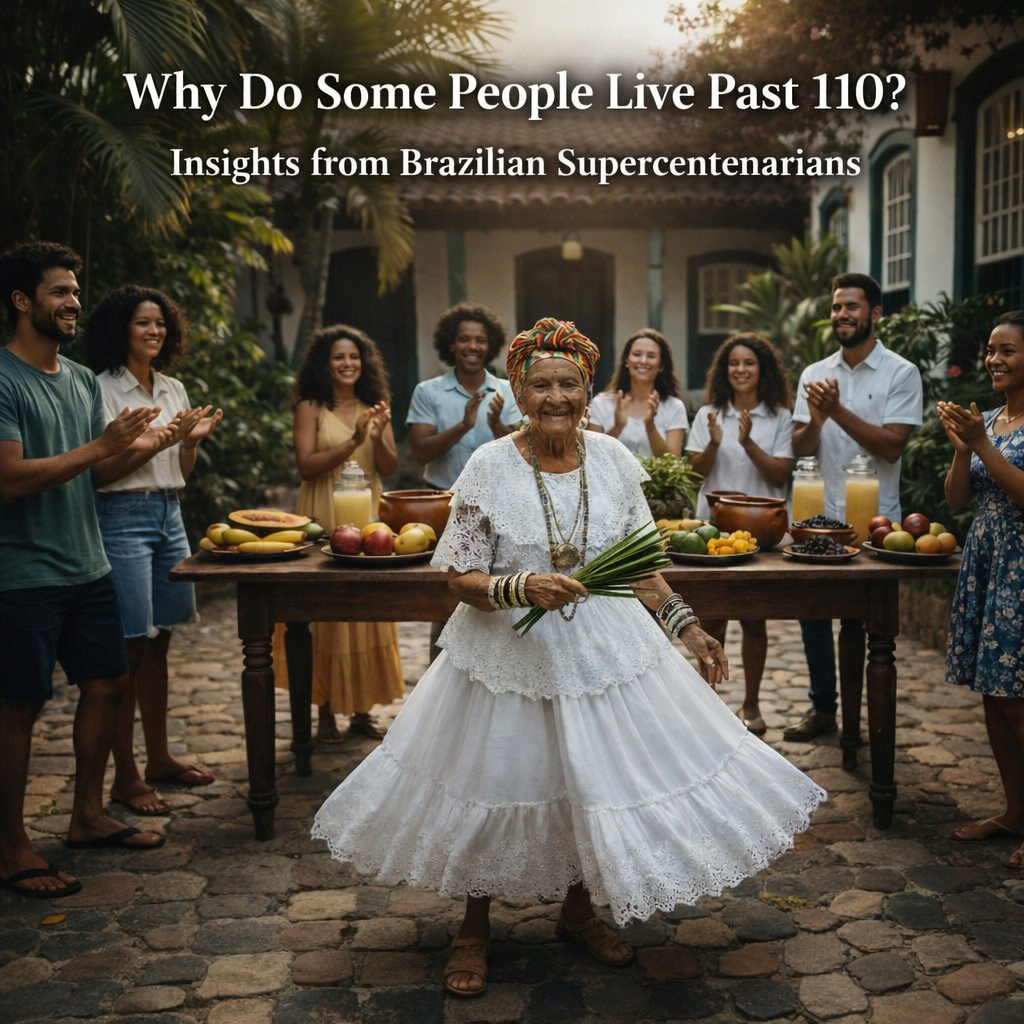
This publication investigates why a small number of people reach extreme old age while remaining relatively healthy and mentally alert. The study focuses on Brazilian centenarians and supercentenarians, a population rarely included in genetic research despite Brazil’s exceptional biological diversity.
Genetics: a strong foundation for long life
The results suggest that genetics plays a central role in exceptional longevity. Many of the individuals studied come from families where long life is common, pointing to inherited biological traits that protect against age-related decline. Brazil’s mixed ancestry allowed researchers to detect rare genetic variants that are often absent from studies based on more uniform populations.
Immunity: resilience against disease
Another key conclusion concerns the immune system. These very old individuals appear to maintain immune function far longer than expected. Their bodies seem better able to control inflammation and resist infections, even at extreme ages. Several participants survived serious illnesses, including COVID-19, highlighting an unusual level of immune resilience.
A different way of aging
Rather than simply aging more slowly, the study suggests that supercentenarians may age differently. Their biology appears better at maintaining balance, repairing damage, and tolerating stress. This resilience may delay or reduce the impact of diseases that typically limit lifespan.
The authors emphasize that most genetic studies of aging focus on limited populations, leaving much of human diversity unexplored. By studying underrepresented groups, this research opens new paths for understanding the biological mechanisms behind healthy aging. These insights could eventually inform more inclusive approaches to longevity research and age-related medicine.
The key takeaway
Extreme longevity is not just about reaching a high age. According to this study, it is about biological resilience, a combination of protective genetics and sustained immune function that allows some individuals to remain stable, independent, and mentally sharp well beyond what is considered normal human lifespan.
Click here to Read the full article
You can register for the 2nd World Congress on Targeting Longevity taking place on April 8-9, 2026, in Berlin, Germany: Registration here
Share this with your circle